
Blog
How Equipment Is Valued in a Business Bankruptcy Filing: Chapter 7 vs Chapter 11
Equipment valuation in a bankruptcy filing depends on which chapter you're in and what the trustee or court plans to do with the assets. This guide breaks down when orderly liquidation, forced liquidation, and going-concern value apply, and what a defensible appraisal report needs to state.
When a business files for bankruptcy, the machinery on the shop floor doesn't have one value. It has several, and which one matters depends entirely on what happens to the business next. A trustee liquidating a company piece by piece needs a different number than a debtor trying to reorganize and keep that same equipment running. Getting the standard of value wrong, or failing to state it clearly in the report, is one of the fastest ways an appraisal gets challenged in a filing.
This matters because the equipment schedule isn't just paperwork. It determines how much of a secured creditor's claim is backed by collateral, what a trustee can realistically recover for unsecured creditors, and whether a reorganization plan satisfies the court. Our equipment appraisal services for bankruptcy filings are built around that distinction: the chapter you're in, and the intended use of the appraisal, drive the methodology before a single machine gets inspected.
Why the Standard of Value Changes Everything in a Filing
The value of a piece of equipment isn't a fixed fact. It's an estimate tied to a specific set of assumptions: who the seller is, how much time they have, and what happens to the asset after the sale. Bankruptcy law recognizes this directly. Under 11 U.S.C. Section 506(a), a secured creditor's claim is split into secured and unsecured portions based on the value of the collateral, determined "in light of the purpose of the valuation and of the proposed disposition or use of such property."
That phrase does a lot of work. It means the same CNC machine can carry a different number depending on whether it will stay bolted to the floor and keep producing parts, or get hauled to an auction yard next month. An appraiser working a bankruptcy assignment has to identify that purpose before choosing a methodology, not after.
The practical effect: a debtor's attorney or CPA should never accept an equipment appraisal for a bankruptcy matter that doesn't state its standard of value on the first page. If the report doesn't say whether it's reporting orderly liquidation value, forced liquidation value, or value in continued use, it's not usable in front of a trustee or a judge.
Chapter 7 Liquidation: Orderly vs. Forced Liquidation Value
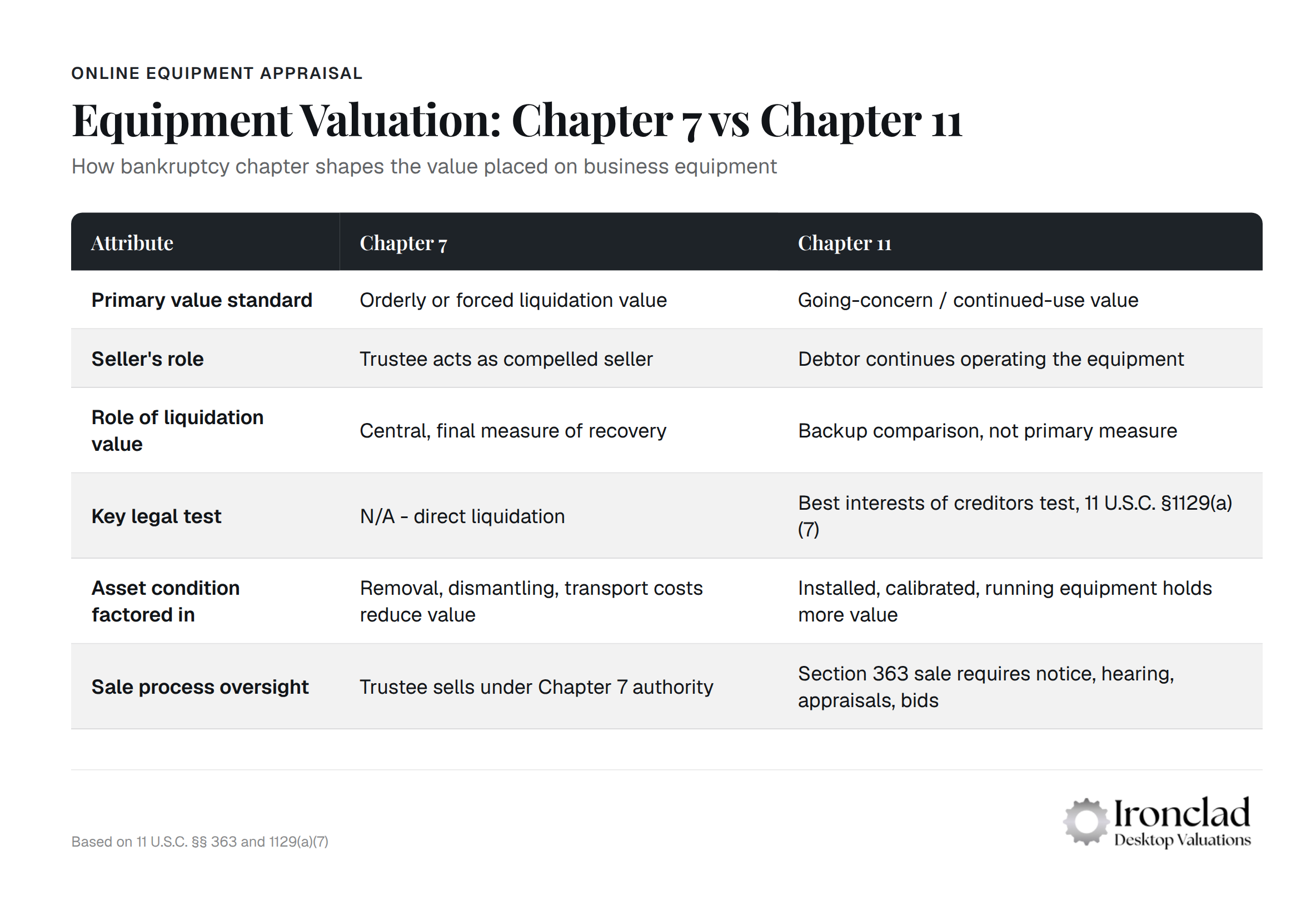
In a Chapter 7 filing, the trustee is a compelled seller by definition. The business isn't continuing, so the relevant question is what the equipment will actually bring at sale, not what it would be worth to a buyer who plans to keep it running.
Two premises typically apply:
- Orderly liquidation value (OLV): An as-is, where-is sale conducted over a reasonable marketing period, long enough to locate buyers for the specific type of equipment involved. This is usually the higher of the two liquidation figures because the seller isn't rushed.
- Forced liquidation value (FLV): A compressed-timeline sale, typically an advertised public auction, where the seller needs cash fast and accepts whatever the market produces on that schedule. FLV is almost always lower than OLV for the same equipment.
Going-concern value can still come into play in Chapter 7, but only in the narrower case where the trustee sells the operating business as a unit rather than liquidating assets piecemeal. That's the exception, not the rule, in a straight liquidation filing.
Chapter 11 Reorganization: Valuing Equipment in Continued Use
Chapter 11 flips the question. The debtor intends to keep operating, which means the equipment's value to the business as an ongoing, productive asset is usually the relevant premise, not what it would fetch at auction.
For installed, specialized machinery, the gap between continued-use value and liquidation value can be substantial. A press line that's been engineered into a production floor, wired, calibrated, and running for years is worth considerably more to the business that depends on it than it would be sold off and hauled away. Removing it also triggers dismantling, rigging, and transportation costs that reduce what a buyer would actually pay.
Liquidation value doesn't disappear in Chapter 11, though. It still matters for two reasons:
- The best interests of creditors test. Under 11 U.S.C. Section 1129(a)(7), a reorganization plan can't be confirmed over a dissenting impaired creditor's objection unless that creditor receives at least as much as they would in a hypothetical Chapter 7 liquidation. That comparison requires a liquidation analysis of the equipment, run alongside the going-concern figures.
- A planned Section 363 sale. If the debtor intends to sell equipment or an entire division outside the ordinary course of business, 11 U.S.C. Section 363 requires notice and a hearing, and the court looks to appraisals, marketing results, and competing bids to confirm the estate is receiving reasonable value.
Net Proceeds: Why a Gross Liquidation Number Can Mislead Creditors
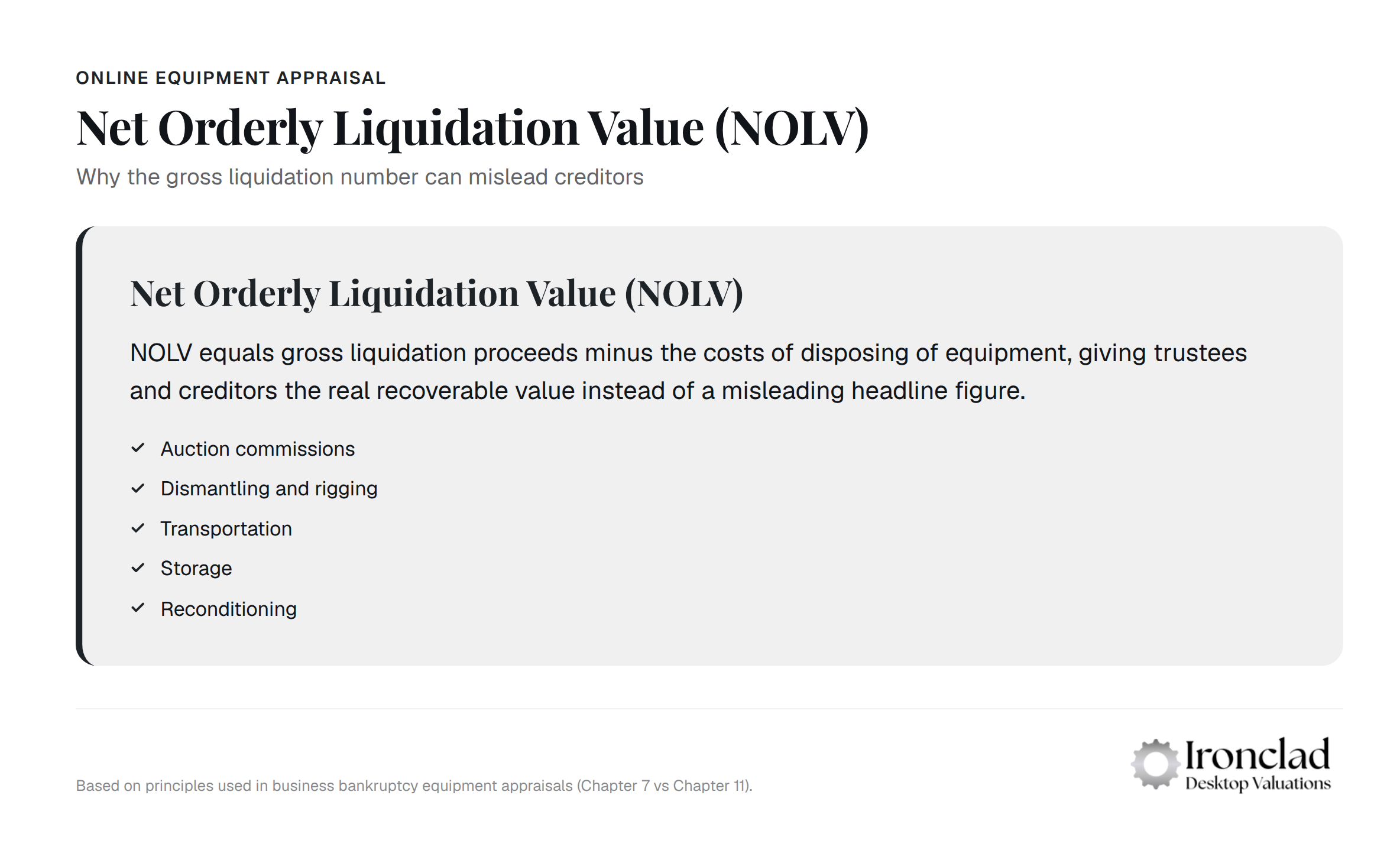
A liquidation value quoted as a single gross figure can overstate what creditors actually receive. A full analysis nets out the costs of getting equipment from the shop floor to a buyer's check, including auction commissions, dismantling and rigging, transportation, storage, and reconditioning.
This is why a credible bankruptcy appraisal distinguishes gross liquidation value from net orderly liquidation value (NOLV). A trustee weighing whether to liquidate piecemeal or negotiate a bulk sale needs the net figure, not the headline number, to compare options accurately.
What a Defensible Bankruptcy Equipment Appraisal Must Include
A report that will hold up to scrutiny from a trustee, a secured creditor's counsel, or the court needs to document more than a dollar figure. At minimum, it should state:
- The effective valuation date, typically the petition filing date for schedule purposes, or another date set by the court.
- The intended use of the appraisal, whether that's completing bankruptcy schedules, supporting a Section 506(a) collateral determination, a Section 363 sale motion, or a Chapter 11 liquidation analysis.
- The standard of value applied, stated explicitly as orderly liquidation value, forced liquidation value, fair market value in continued use, or another defined premise, with the definition spelled out in the report.
- Equipment condition and specifications, including manufacturer, model, serial number, hours or usage, maintenance history, and any modifications.
- Marketability factors, such as the depth of the buyer pool, geographic market, and realistic marketing period for that equipment category.
- Disposition costs, where liquidation premises are used, so gross and net figures are both visible.
Our appraisers prepare these reports in accordance with USPAP (the Uniform Standards of Professional Appraisal Practice), drawing on credentials recognized across the machinery and equipment field, including the ASA, CAGA, and NEBB. A USPAP-compliant report with a clearly stated standard of value gives a trustee, judge, or opposing counsel a defensible basis for review. No appraiser can guarantee a trustee will adopt a given figure or that a court will rule a particular way; what a properly scoped report can do is remove ambiguity about what was valued, why, and under what assumptions.
Pro tip: If you're not sure yet whether your case will proceed under Chapter 7 or Chapter 11, say so when you request the appraisal. It's common for a debtor's attorney to need both a liquidation figure and a continued-use figure side by side before deciding how to proceed, and scoping both up front is more efficient than ordering a second report later.
If your case also involves secured equipment debt, it's worth understanding how forced liquidation value gets used in lender collateral decisions, since many secured creditors in a bankruptcy filing are the same lenders who required an appraisal at origination. For a closer look at how orderly liquidation and fair market value diverge outside of bankruptcy, see our breakdown of orderly liquidation value vs. fair market value.
What Equipment Valuation for a Bankruptcy Filing Costs
Bankruptcy equipment appraisals are quoted as a fixed fee after we scope the assignment, never billed hourly. The fee depends on the number of assets being valued, how complete the existing equipment records are, whether both liquidation and continued-use premises are needed, and the depth of documentation the intended use requires (a trustee's schedule versus a contested 506(a) valuation hearing, for example). It does not depend on what the equipment is ultimately worth; a appraisal covering a few pieces of straightforward machinery with good records will cost less than one covering a full production line under a compressed court deadline, regardless of the dollar values involved.
Getting the Standard of Value Right the First Time
The single most common mistake in bankruptcy equipment schedules isn't a bad number, it's an undocumented one. A figure without a stated premise, valuation date, and intended use invites exactly the kind of challenge that slows a filing down. Whether you're preparing Chapter 7 schedules, supporting a Chapter 11 reorganization plan, or responding to a secured creditor's 506(a) motion, the report needs to show its work.
Our team works directly with debtors' counsel, trustees, and CPAs to scope the right standard of value before the inspection starts, not after the report is drafted. If you're facing a filing and need equipment valued for schedules, a sale motion, or a liquidation analysis, our bankruptcy appraisal team can walk you through what the court or trustee will expect.
This article is provided for general informational purposes only and does not constitute legal, tax, or financial advice. Readers should consult a qualified attorney or CPA regarding their specific circumstances.